Indian classical music has always walked a delicate line between discipline and freedom, between shastra and anubhava. One of the most debated concepts within this tradition is Gayansamay, the association of specific ragas with particular times of the day. Even today, this idea continues to evoke strong opinions, thoughtful disagreements, and deeply personal reflections. When we look closely, Gayansamay is neither a rigid rulebook nor a superstition. It is a refined understanding of music, nature, and the human inner world.
- Why Gayansamay Makes Sense
- The Body, the Mind, and Circadian Rhythm
- Raga Prakriti and Inner Readiness
- Swaras, Structure, and Time
- Nature, Geography, and Modern Realities
- Freedom, Choice, and Personal Experience
- So, Is Gayansamay Still Relevant?
- Contributors
- Should beginners strictly follow Gayansamay while learning?
- What is the core takeaway from this discussion?
Why Gayansamay Makes Sense
At its core, Gayansamay feels intuitive. Many musicians sense that certain ragas “sit” more naturally at specific hours. This intuition is often linked to frequencies and resonance, how particular swara combinations seem to blend seamlessly with the atmosphere at different times of the day.
Equally important is the human mood cycle. Our mental and emotional states are not constant throughout the day. Dawn carries stillness, afternoons carry activity, evenings bring softness, and nights invite introspection. Ragas, with their unique melodic personalities, appear to mirror these shifts organically rather than artificially.
The Body, the Mind, and Circadian Rhythm
Our Gurujan may not have used modern scientific terminology, but through observation and lived experience, they deeply understood what we now call the circadian rhythm, the body’s natural 24-hour cycle. This rhythm governs our alertness, emotional sensitivity, breathing, and even voice quality.
Certain note patterns feel emotionally powerful only when the body and mind are receptive. Gayansamay, in this sense, is not merely about the clock, but about alignment. When a raga is sung at a time when the listener’s and performer’s internal states are naturally attuned to its rasa, the emotional impact deepens.
Raga Prakriti and Inner Readiness
Take Raga Bhairav as an example. Described in the shastras as having gambhir prakriti, it demands seriousness, stability, and inwardness. Early morning, when the mind is relatively uncluttered and the body is calm, becomes an ideal space to experience this gravity. Singing Bhairav late at night after mental exhaustion may still be musically correct, but the rasa may not fully unfold.
Pt. Jasraj sings Raga Bhairav
This logic extends to other ragas as well. Each has its own flavour, temperament, and emotional demand. Gayansamay, therefore, supports the performer in meeting the raga halfway.
Swaras, Structure, and Time
From a structural perspective, the time theory also arises from swara selection and combination. Ragas dominated by komal swaras, Re, Ga, Dha, or Ni, often evoke seriousness, introspection, or detachment, naturally aligning with dawn or late night. In contrast, shuddha and teevra swaras feel brighter and expansive, resonating with day or evening moods.
These tendencies were further refined through concepts like purvanga and uttaranga, allowing ragas to move in harmony with the listener’s psychological state across the day. Over time, this experiential knowledge was organised into thaats, but its soul remained rooted in observation and deep listening.
Nature, Geography, and Modern Realities
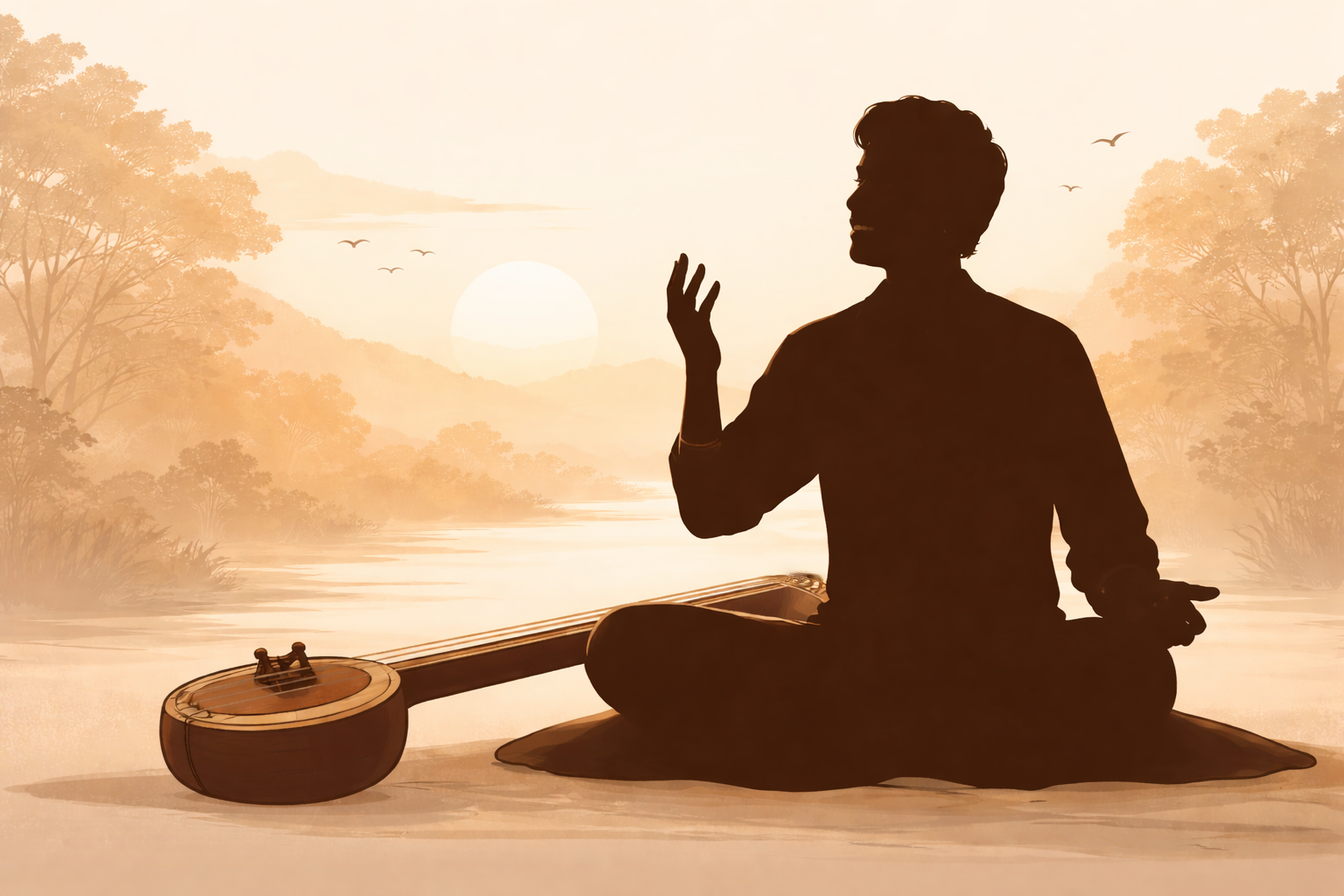
There is also a compelling argument that Gayansamay emerged from a close relationship with nature itself. Early sages are believed to have absorbed melodic ideas from natural frequencies like bird calls, wind patterns, and environmental resonance. From this viewpoint, performing raga-based music close to nature makes adherence to Gayansamay more meaningful.
As Indian classical music reaches global audiences, practical questions around raag samay emerge. In places like Finland or Norway, where daylight can last until 11 PM, time-based prescriptions cannot be followed literally, reminding us that raag samay is contextual rather than absolute.
As one musician wisely said:
“Gaane ka ek hi nikash hona chahiye: achha gaana bajana hona chahiye. Agar Bhairav apne samay pe gaya aur acha nahi gaya, toh kya fayda?”
Ultimately, musical quality and sincerity outweigh rigid adherence.
Watch Dr. Prabha Atre ji as she talks about Raga related concepts
Freedom, Choice, and Personal Experience
Today’s lifestyle often dictates when we can practice or perform. If an artist feels drawn to sing Malkauns in the evening because that is when space and silence are available, the experience is not diminished. It simply exists outside the traditional framework, and that is not something wrong.
Pt. Ajoy Chakraborty sings Raga Malkauns
Interestingly, Gayansamay also works in reverse. Many composers report that when they begin with a mood or lyric, the raga that emerges naturally points toward a time of day. Compositions born from morning riyaz tend to gravitate toward morning ragas, while evening or night creativity often leans toward Puriya or Yaman frameworks. This reinforces the idea that time, mood, and melody are deeply intertwined, whether consciously or subconsciously.
So, Is Gayansamay Still Relevant?
Yes, but not as a rigid commandment.
Gayansamay should be understood as a guideline, a refined suggestion rooted in centuries of listening, living, and reflecting. It helps us achieve the best possible emotional alignment between raga, performer, and listener. At the same time, music remains a living art, shaped by changing contexts, global stages, and individual lives.
Respecting Gayansamay deepens our understanding of ragas. Transcending it, when needed, reflects artistic honesty. When both coexist with awareness, Indian classical music continues to breathe, timeless, adaptable, and profoundly human.
Contributors
This article is a collective outcome of insightful perspectives shared in our community discussion on Gayansamay. We sincerely thank all contributors whose experiences, reflections, and viewpoints helped shape this piece:
Prathamesh Nandanwar, Shaashi, Aman Ghormade, Anu Agrawal, Devang Deshpande, Yogesh Bahadur, Ravi Kant Agrawal.
Indian classical music thrives on dialogue, and this article is a small continuation of that shared samvaad.
Join the community here: https://chat.whatsapp.com/EYMOLhyPdfvGKJzuTuGwGa
In the end, perhaps Gayansamay is not about obeying the clock, but about listening, to nature, to the body, and to the music itself.
Should beginners strictly follow Gayansamay while learning?
Following Gayansamay during learning can deepen understanding of rasa and raga character, but flexibility and consistency in practice are equally important.
What is the core takeaway from this discussion?
Gayansamay is best understood as a sensitive tool for deeper musical awareness, not a restriction, allowing tradition and modern musical life to coexist thoughtfully.