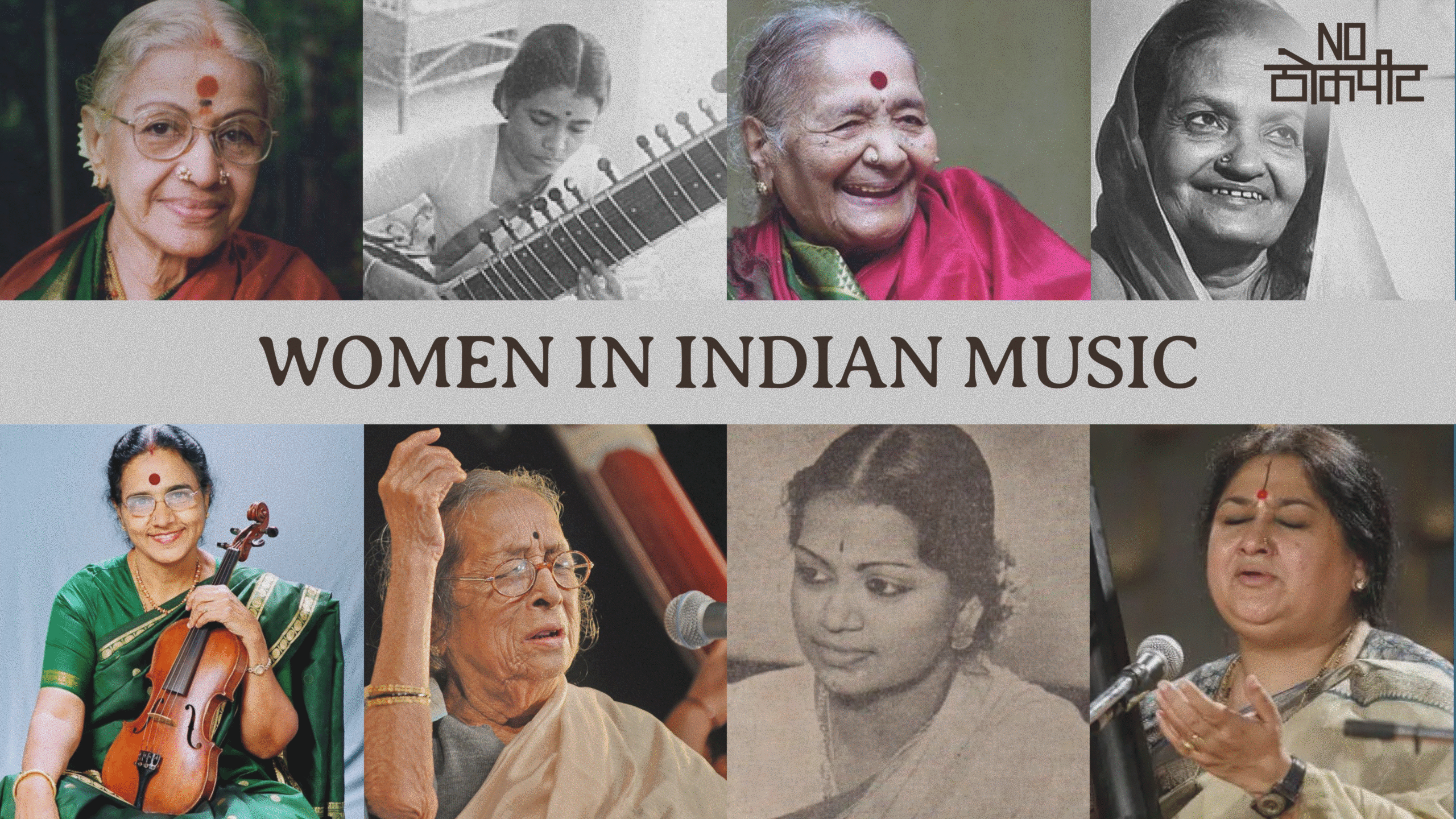
Indian classical music, with its profound spiritual and cultural roots, has long been enriched by the contributions of women. From the sacred corridors of temples to the modern stages of international concert halls, women have played pivotal roles in shaping the soundscape of India. Their journey, however, reflects a complex interplay of devotion, societal norms, resilience, and artistic excellence.
The Era of Devadasis
The history of women in Indian classical music begins prominently with the Devadasis, women dedicated to temple service. These women were not merely performers but custodians of a sacred musical tradition. They mastered Carnatic music in South India, performing intricate compositions for deities as offerings. Their training often began in childhood, emphasizing both vocal and dance forms such as Bharatanatyam. Legends like M.S. Subbulakshmi, though from a later era, carried the spiritual legacy of these temple traditions.
M. S. Subbulakshmi performs Ganesa Pancharatnam
Devadasis played a critical role in preserving compositions by composers like Tyagaraja and Muthuswami Dikshitar. Their performances were devotional rituals. Despite societal challenges and later stigmatization due to social reforms, the Devadasi tradition ensured the survival of complex ragas and talas that continue to inspire musicians today.
Women in Hindustani Classical Music
In North India, the contributions of women to Hindustani classical music have been equally significant. Many of them emerged from the courtesan tradition, where women were trained in classical singing and dance to entertain royal courts. Over time, women artists transitioned from court performers to public concerts, gaining recognition as gharana stalwarts.
Gangubai Hangal sings Raga Yaman
Artists such as Gangubai Hangal and Begum Akhtar redefined Hindustani music for the modern audience. Gangubai Hangal, a celebrated vocalist of the Gwalior Gharana, brought depth and rigor to khayal singing, while Begum Akhtar popularized ghazals and thumri, making emotive singing accessible to wider audiences. Women performers were instrumental in democratizing music, making it part of social gatherings, radio broadcasts, and eventually cinema.
Begum Akhtar performs the famous ghazal Aaye Kuchh Abr, Kuchh Sharab Aaye
Breaking Barriers: Women as Maestros
The 20th and 21st centuries witnessed women breaking barriers across genres and instruments. In Carnatic music, D.K. Pattammal and M.L. Vasanthakumari not only excelled as vocalists but also composed music, taught students, and challenged gender biases in performance spaces. Their contributions inspired generations of women musicians to pursue music professionally, beyond domestic or temple confines.
DK Pattammal- Live in Concert
In Hindustani music, artists like Shubha Mudgal and N. Rajam expanded the possibilities of voice and violin, respectively. N. Rajam, trained in the Maihar Gharana, introduced a unique style of violin playing that mimicked the vocal nuances of ragas, demonstrating that women could innovate within even the most rigorous musical frameworks.
Shubha Mudgal sings Raga Bhimpalasi
Women in Instrumental Music
Historically, Indian classical music was dominated by male instrumentalists. However, women have increasingly taken center stage. Annapurna Devi, a sitar virtuoso and the daughter of Ustad Allauddin Khan, was revered for her mastery of the surbahar. Though she shunned public performances for much of her life, her teaching shaped the careers of legendary musicians, including Shiv Kumar Sharma. In tabla, contemporary artists like Taufiq Qureshi’s disciples and other female percussionists are redefining the rhythm landscape, showing that women are equally adept at complex talas.
Annapurna Devi performs Raga Manjh Khamaj on Surbahar
The Role of Modern Platforms
Today, women in Indian classical music are leveraging technology and global platforms to reach wider audiences. Social media, online classes, and international festivals have democratized access, allowing talented artists from smaller towns to gain recognition. Programs like SPIC MACAY and institutions such as Kalakshetra and Sangeet Natak Akademi continue to promote female musicians, ensuring that tradition meets modernity.
Challenges and Triumphs
Despite progress, women musicians often face challenges related to societal expectations, familial responsibilities, and unequal recognition. Yet, their perseverance has enriched Indian classical music. Female maestros not only preserve ancient traditions but also innovate, creating new interpretations while honoring classical foundations.
Conclusion
The journey of women in Indian classical music reflects resilience, devotion, and artistic brilliance. From the sacred Devadasis to globally acclaimed maestros, women have been central to the evolution and preservation of India’s musical heritage. Their contributions remind us that music transcends gender, becoming a universal expression of culture, emotion, and spirituality.