How Improvisation Works in Classical Performance: Structured Spontaneity Explained
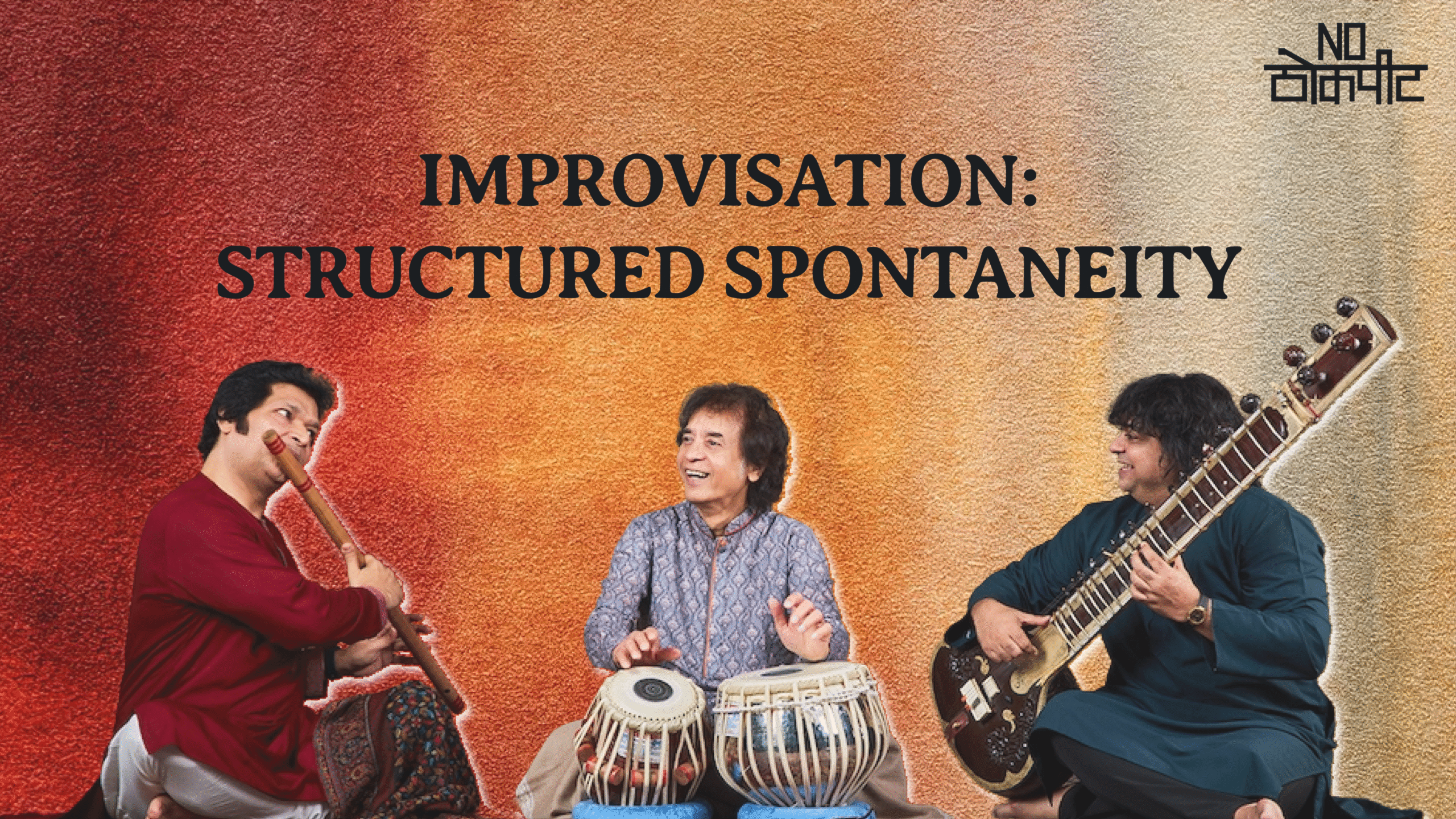
In the world of Indian classical music, improvisation is the very essence of expression. Every raga performance, whether in the Hindustani or Carnatic tradition, is a journey of spontaneous creation within a deeply structured framework. To the untrained ear, an artist’s extemporaneous elaboration might seem like a free-flowing invention. But behind every phrase lies centuries of tradition, grammar, and discipline that guide the performer’s imagination.
Understanding Improvisation in Indian Classical Music
Improvisation in Indian classical music, called manodharma sangeet in the Carnatic system and vistar or alap in the Hindustani system, refers to the art of creating new melodic expressions based on the grammar of a raga and the rhythm of a taal.Every musician learns the fixed compositions (bandish in Hindustani, kriti in Carnatic) but is also trained to elaborate upon them. This elaboration follows a hierarchical system of structure, where freedom and discipline coexist.
Rasika Shekhar explains what is improvisation
The Foundation: Raga and Taal
Improvisation always begins with understanding the raga, a melodic framework defined by specific notes (swaras), characteristic movements (pakad), and emotional flavor (rasa). For example, Raga Yaman allows for all seven notes with a sharp Ma (Tivra Ma), but phrases like Ni Re Ga Ma or Ga Ni Dha Pa create its unique identity. A performer cannot violate these essential melodic laws, even when improvising.
Similarly, the taal provides rhythmic discipline. A 16-beat Teentaal or a 7-beat Rupak defines the temporal structure around which improvisation unfolds. The balance between melodic expansion and rhythmic architecture ensures that creativity remains anchored in tradition.
Improvisation in Hindustani Music
In the Hindustani system, improvisation develops gradually through specific stages:
1. Alap: The Meditative Beginning
The alap is the purest form of improvisation, free from rhythm. The artist slowly unfolds the raga, exploring each note’s emotional color. For instance, in Raga Darbari Kanada, the komal Ga and Dha are introduced with deep, oscillating bends that evoke a mood of introspection. There is no fixed composition, only the raga’s essence guides the flow.
2. Jod and Jhala: Adding Pulse
After the alap, the jod introduces a rhythmic pulse, leading to the jhala, where the tempo accelerates. The sitar or sarod player weaves intricate rhythmic patterns using strings and drones, showcasing both mastery and spontaneity.
3. Bandish and Vistar: Structured Exploration
Once the composition (bandish) begins, improvisation occurs within its structure. The artist explores the raga through vistar (melodic elaboration), taans (fast passages), and bol-bant (rhythmic variations on the text). In a khayal performance, for example, an artist might repeat a single line like “Piya ki najariya mil gayi re” in multiple melodic and rhythmic variations, each one unique yet true to the raga.
4. Sawaal-Jawaab: Musical Conversation
Improvisation also takes place as dialogue. In a jugalbandi (duet), one musician poses a phrase (sawaal), and the other responds (jawaab). This exchange reflects not competition but mutual respect and creative interplay.
Watch this amazing recital of Raga Kaunsi Kanada by Pt Shivkumar Sharma, accompanied on tabla by Ustad Zakir Hussain, which contains all of the above 4 stages
Improvisation in Carnatic Music
In the Carnatic tradition, improvisation is more systematized but equally profound. The main elements include:
1. Raga Alapana
Similar to the Hindustani alap, the raga alapana introduces the raga without rhythm, showcasing the artist’s understanding of its grammar and emotion.
2. Tanam
Here, rhythmic improvisation enters, usually rendered with syllables like ta nam ta nam. It serves as a bridge between melodic exploration and composition.
3. Kalpana Swaras
During the rendition of a kriti, the performer improvises sequences of swaras (notes) over specific beats. For instance, in Raga Kalyani, a musician might sing “sa ri ga ma pa” patterns landing precisely on the sam (first beat), demonstrating rhythmic precision and creative flow.
4. Niraval
In niraval, the artist takes a specific line from the kriti and reinterprets it melodically and rhythmically, maintaining the lyrical meaning but exploring endless variations. It reflects both imagination and intellectual control.
Structured Spontaneity: The Balance of Freedom and Discipline
Improvisation in Indian classical music is structured spontaneity. The musician’s mind must balance two forces:
- Discipline, which ensures adherence to raga grammar and rhythmic cycle.
- Freedom, which allows emotional and creative expression.
This balance can be compared to a poet writing a sonnet. The meter and rhyme scheme are fixed, but within that structure lies infinite creative space. Likewise, a tabla player improvising within Teentaal cannot break its 16-beat cycle, but can explore endless rhythmic possibilities through paltas, tukdas, and layakari (manipulation of tempo).
Examples of Great Improvisers
Artists like Pandit Bhimsen Joshi, Ustad Vilayat Khan, and Lalgudi Jayaraman were renowned for transforming each performance through improvisation. No two renditions of their ragas were ever identical. Similarly, Pandit Ravi Shankar’s live concerts displayed spontaneous innovations that enriched his pre-composed structures, making every concert a fresh experience.
Even percussionists like Ustad Zakir Hussain and Palghat Mani Iyer exemplify improvisation through rhythmic dialogues, where they build upon the audience’s anticipation before resolving perfectly at sam.
Improvisation as a Reflection of the Artist’s Inner State
In Indian philosophy, sound (nada) is seen as a bridge between the self and the divine. Improvisation, therefore, is a form of meditation in motion. A musician does not merely perform; they reveal the raga as a living entity. Each moment on stage is a dialogue between the artist, the raga, and the listener’s consciousness.
Why Improvisation Matters Today
In today’s era of recordings and digital precision, improvisation reminds us that music is alive, unpredictable, and deeply human. It invites listeners to experience each performance as a unique moment in time, never to be replicated again.
Conclusion
Improvisation in Indian classical performance is not randomness, but is freedom within discipline, creativity within structure, and emotion guided by knowledge. Whether in the serene unfolding of a Raga Yaman alap or the intricate tihai of a tabla solo, improvisation celebrates the eternal dialogue between order and imagination. It is this living, breathing spirit that keeps Indian classical music timeless.