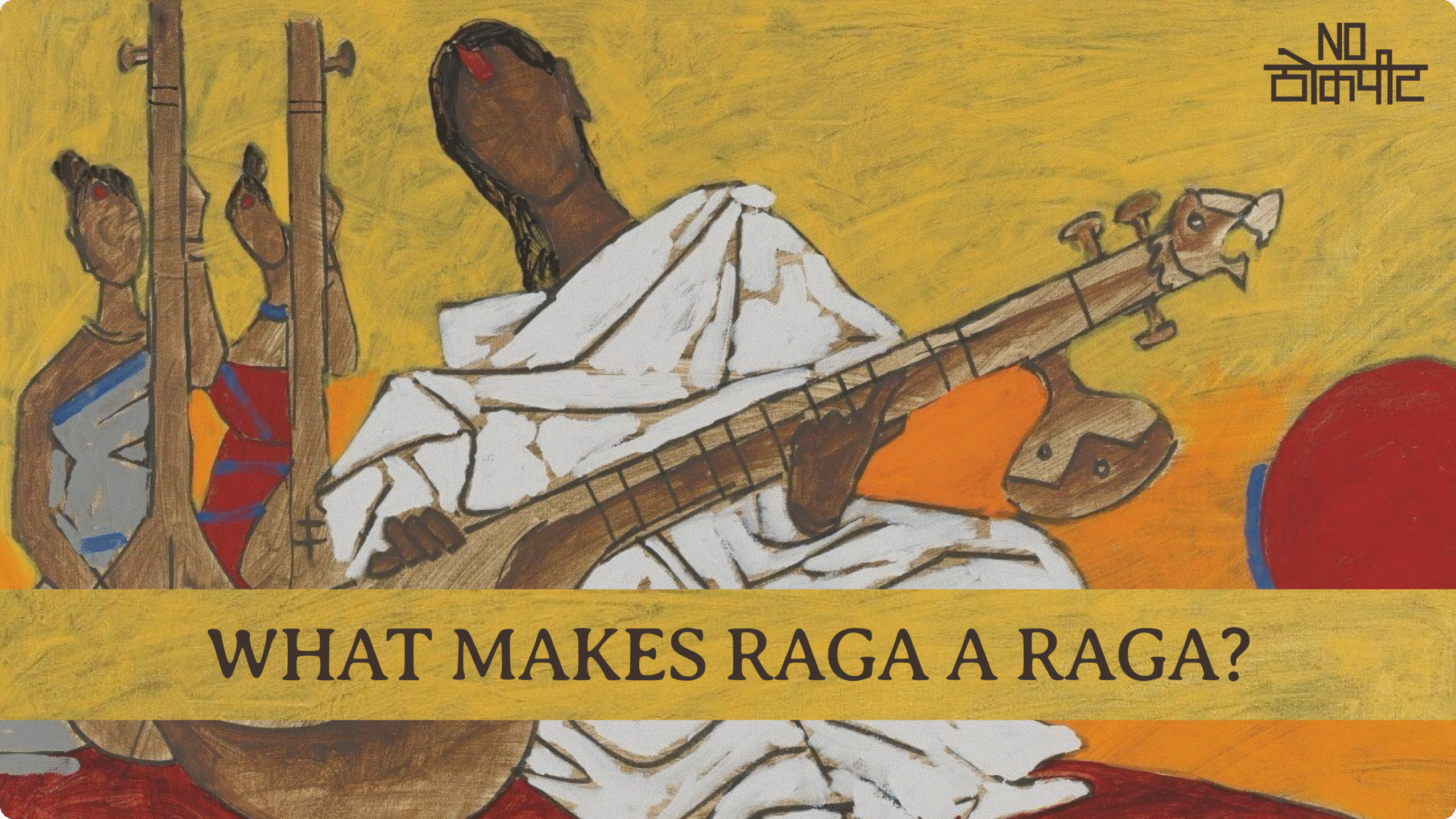
In Indian classical music, Raga is far more than a mere scale or sequence of notes. It is a living melodic framework, carefully designed to evoke emotion, time, and atmosphere. To understand what truly makes a raga a raga, we must explore its structure, rules, emotional depth, and spiritual significance.
What is a Raga?
A raga (from the Sanskrit root “ranj”, meaning to color or to please the mind) is a melodic structure that uses specific notes (swaras), phrases, and emotional guidelines (rasa). Each raga paints a different emotional color and is tied to a particular time of day or season.
Think of a raga as a musical personality, unique, expressive, and deeply human.
Examples:
- Raga Yaman: Serene and devotional, performed in the evening.
- Raga Bhairav: Serious and meditative, performed at dawn.
- Raga Desh: Joyful and romantic, associated with the monsoon.
Raga explained by Sitar maestro Niladri Kumar
The Core Elements that Define a Raga
1. The Seven Notes (Swaras)
Indian classical music uses seven notes: Sa, Re, Ga, Ma, Pa, Dha, Ni, corThe Core Elements that Define a Raga
responding to Do, Re, Mi, Fa, So, La, Ti in Western notation.
These can appear in:
- Shuddha (Natural)
- Komal (Flat)
- Tivra (Sharp) forms
Each raga chooses a specific combination, and not necessarily a raga is to have all the notes.
Example:
- Raga Yaman uses Tivra Ma and all other notes are Shuddha.
- Raga Bhairavi uses Komal Re, Ga, Dha, and Ni.
2. Aaroh and Avaroh (Ascent and Descent)
These define the movement of a raga, how it ascends and descends. A raga may skip or add notes in one direction but not the other.
Examples:
- Raga Bhopali:
- Aaroh: Sa Re Ga Pa Dha Sa
- Avaroh: Sa Dha Pa Ga Re Sa
(Pentatonic raga using 5 notes)
- Raga Yaman:
- Aaroh: Ni Re Ga Ma(T) Dha Ni Sa
- Avaroh: Sa Ni Dha Pa Ma(T) Ga Re Sa
3. Vadi and Samvadi (Dominant Notes)
Every raga has a Vadi (most important note) and Samvadi (second most important note). These notes serve as emotional anchors.
Examples:
- Raga Yaman: Vadi : Ga, Samvadi : Ni
- Raga Bhairav: Vadi : Dha, Samvadi : Re
4. Pakad (Signature Phrase)
The Pakad or Chalan is a short melodic phrase that reveals the raga’s identity or its musical fingerprint.
Examples:
- Yaman: Ni Re Ga Ma# Ga Re Sa
- Bhairav: Dha♭ Ni Sa Re♭ Ga Ma Ga Re♭ Sa
5. Samay and Ritu (Time and Season)
Ragas are traditionally linked to specific times of day and seasons, aligning human emotion with nature’s rhythm.
| Time / Season | Typical Ragas | Mood |
| Morning | Bhairav, Todi | Calm, introspective |
| Afternoon | Multani, Patdeep | Reflective, bright |
| Evening | Yaman, Puriya | Peaceful, devotional |
| Night | Darbari, Malkauns | Deep, majestic |
| Monsoon | Megh, Miyan ki Malhar | Joyful, romantic |
| Spring | Basant | Fresh, energetic |
6. Rasa (Emotional Essence)
Each raga is meant to express a specific rasa or emotion.
| Raga | Rasa (Emotion) |
| Bhairavi | Compassion (Karuna Rasa) |
| Malkauns | Heroism (Veera Rasa) |
| Kafi | Romantic Playfulness (Shringara Rasa) |
| Durga | Devotion (Bhakti Rasa) |
The rasa transforms a raga from structure into spiritual experience.
Raga vs. Scale: The Key Difference
A scale is merely a set of notes, while a raga is a complete melodic philosophy.
If a scale is the alphabet, a raga is the poetry crafted from it.
Example:
Raga Durga and Raga Malkauns both use five notes, but their emotional impact is worlds apart due to their unique phrases and ornamentations.
The Ornamentation (Alankars) that Bring Ragas Alive
Ragas breathe through ornamentation techniques, known as alankars:
- Meend: Gliding between notes.
- Gamak: Rapid oscillation.
- Andolan: Slow, deliberate vibration.
- Kan: Grace note or quick touch.
For instance, the smooth meend from Re to Ma in Raga Yaman gives it its unmistakable flavor.
Ornamentation techniques in Hindustani Music
Improvisation: The Soul of Raga Performance
Improvisation is at the heart of Indian classical music. A musician’s creativity unfolds within the raga’s framework, blending discipline with emotion.
The performance usually progresses as follows:
- Alaap : Slow, free exploration of the raga.
- Jor / Jhala : Gradual rhythmic buildup.
- Bandish / Gat : Fixed composition set to a taal (rhythmic cycle).
- Taan / Sargam : Fast, virtuosic melodic patterns.
Each stage reveals new emotional dimensions of the raga.
Why a Raga is More Than Melody
A raga embodies mathematical precision, emotional expression, and spiritual intent. It connects sound (naad) with consciousness, uniting the performer, the listener, and nature itself.
From the depth of Raga Darbari to the joy of Raga Desh, every raga tells a story, one that transcends language and time.
Conclusion: The Living Soul of Indian Melody
What makes a raga a raga lies in its unique grammar, ornamentation, time theory, and emotional purpose. It is not just a melody but an experience, one that touches the listener’s heart and uplifts the spirit.
A true raga is where structure meets soul, and sound becomes an emotion.