
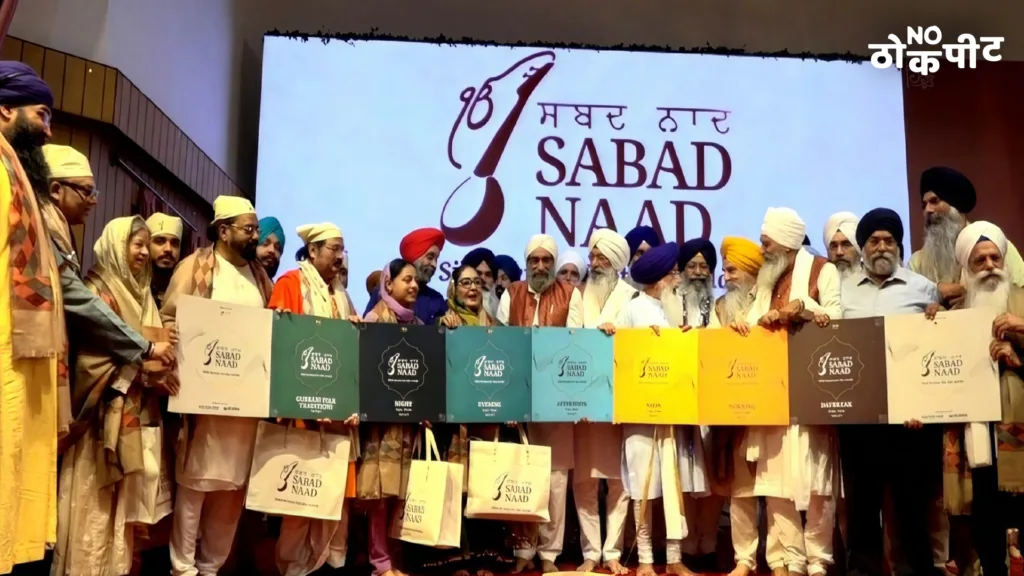
Eighteen hours of music, 141 shabads and every one of the 62 ragas named in the Guru Granth Sahib: that is Sabad Naad, the Gurbani kirtan project that the Mumbai label Asli Music released at Ramgarhia Girls’ College in Ludhiana on 30 October 2026.
It took almost a decade to reach that stage. The idea first took shape in 2017, in conversations between the composer Ustad Sukhwant Singh and the producer and mixing engineer KJ Singh. They imagined about 70 compositions. Word spread, musicians kept asking to join, and the collection doubled before the team finally stopped recording and turned to the mix. The pandemic paused the work along the way.
What is Sabad Naad?
Sabad Naad is an 18-hour archive of Gurbani kirtan, the sung form of Sikh scripture, recorded in all 62 ragas of the Guru Granth Sahib: 31 shuddh (pure) and 31 mishrit (mixed). Its 141 original shabads are spread across seven albums, arranged by the time of day each raga belongs to, as the Sikh Gurus prescribed.
A teacher’s work behind the music
The project traces back to the late Sant Baba Sucha Singh, the scholar who revived Gurmat Sangeet, the raga-based kirtan tradition, and brought its old string instruments back into use. His disciple Ustad Sukhwant Singh carried that work into this recording. Many of the singers came from Hindustani or Carnatic music rather than kirtan, so he taught them each composition, its structure and its meaning. Those unsure of Punjabi pronunciation were coached line by line and wrote the verses out in scripts they could read easily.
Some sessions became stories of their own. When KJ Singh called his first four singers, Hariharan, Aruna Sairam, Mahalakshmi Iyer and Sanjeev Abhyankar, each one agreed within minutes. Zakir Hussain’s session was planned around one of his visits to India, and he encouraged other tabla players to take part. After hearing Sukhwant Singh’s students sing, KJ Singh invited about 40 of them to a three-day session that became the project’s chorus.
Strings at the centre, no harmonium
Listen for the strings. The rabab, saranda, taus, dilruba and sarangi carry the melody, with the jori-pakhawaj, the pair of drums used in Sikh kirtan, for rhythm. The harmonium, the sound most listeners link with kirtan today, was used only in rehearsals and left out of the final recordings. It was a deliberate choice to put the older string instruments back where the tradition first placed them. Because sessions took place in several cities, the team used a portable recording setup to keep the sound consistent, and recorded everything in high resolution.
Rekha Bharadwaj at the Sabad Naad launch in Ludhiana
More than 200 musicians appear on Sabad Naad. Kirtaniyas such as Bhai Sarabjeet Singh Laddi of Darbar Sahib sing alongside Hindustani and Carnatic artists including Kaushiki Chakraborty, Ajoy Chakrabarty, Ashwini Bhide Deshpande, Shubha Mudgal, Amjad Ali Khan, Bombay Jayashri and TM Krishna. If you’d like to hear some of them live this season, Ajoy Chakrabarty sings at The IIC Experience in New Delhi, and Amjad Ali Khan is touring North America with his sons.
Where can you listen to Sabad Naad?
All seven volumes of Sabad Naad are streaming on YouTube, Spotify, Apple Music, Amazon Music, JioSaavn and Gaana. The project posts updates on its official Instagram page. For more new recordings rooted in the ragas, browse our Releases & Collaborations news and this week’s picks on New Songs, Noted!
Sources: The Tribune, launch report from Ludhiana (31 October 2026); The Tribune, “Preserving the sacred sound” (1 November 2026)